What Sets Dental Crowns in Los Angeles CA Apart?
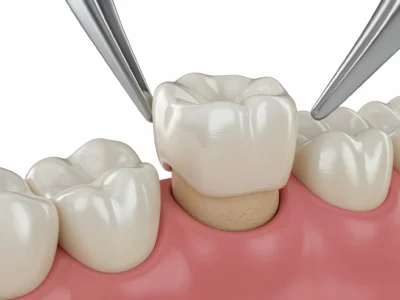
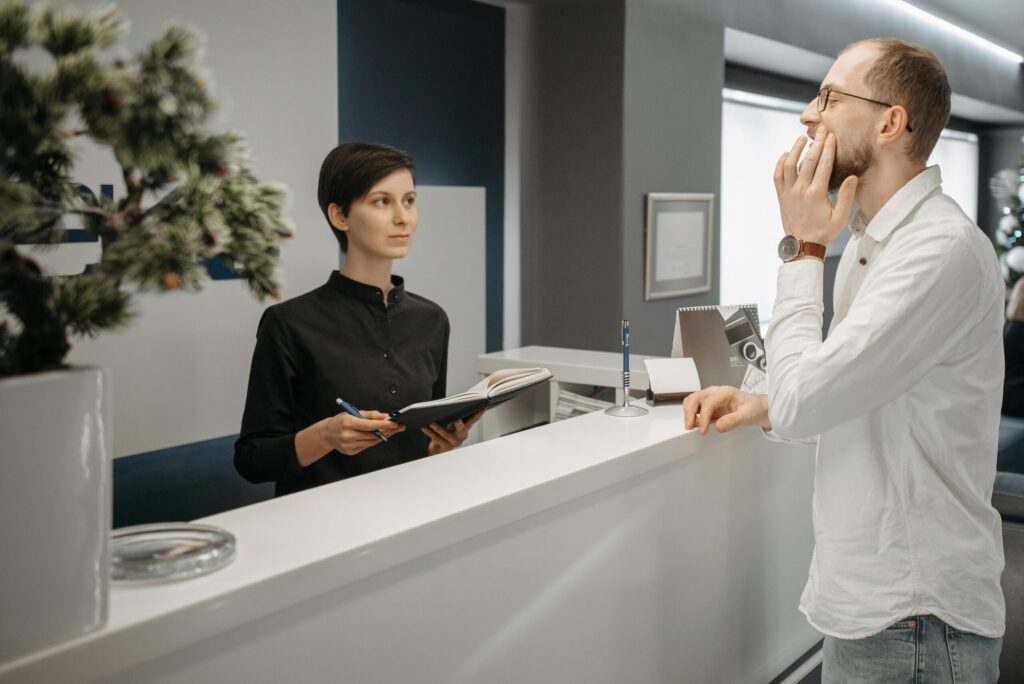
A dental crown can look simple from the outside. It is a cap that covers a damaged tooth, restores strength, and ideally blends in so well that nobody notices it. In practice, a crown is one of the most technique-sensitive restorations in dentistry. Small choices in diagnosis, tooth preparation, bite design, material selection, lab communication, and cementation can determine whether a crown feels effortless for ten years or becomes a source of discomfort after ten days.
That is why the phrase Dental Crowns Los Angeles CA means more than a geographic label. Los Angeles has a distinct mix of patient expectations, cosmetic standards, clinical specialization, and dental laboratory support. Those factors shape how crowns are planned and delivered, often in ways that differ from smaller markets or practices that handle fewer complex aesthetic cases.
If you are trying to understand what truly sets crowns in Los Angeles apart, it helps to look beyond the brochure language. The real differences show up in the details.
The expectations are unusually high, and that changes the work
In many cities, a patient comes in because a tooth broke, there is a large filling that failed, or a root canal left a tooth brittle. Function leads the conversation. In Los Angeles, function still matters, but aesthetics often arrive in the room at the same time. Patients do not just want the tooth protected. They want the crown to disappear into the smile.
That expectation affects nearly every stage of treatment. A crown on a back molar still needs solid bite strength, but even posterior teeth matter when someone has a broad smile or works in a client-facing role. On front teeth, the bar rises significantly. Shade is not enough. Dentists and labs have to think about translucency, surface texture, light reflection, incisal edge character, and how the crown looks in morning sunlight versus indoor lighting.
This is one area where Los Angeles practices often distinguish themselves. Many have extensive experience with appearance-driven dentistry because they treat actors, executives, on-camera professionals, and patients who are simply very observant about their smiles. You do not need to work in entertainment to benefit from that environment. A practice that routinely handles demanding cosmetic cases tends to develop a sharper eye across the board.
I have seen the difference this makes in consultations. In a standard setting, a patient might be told, “We’ll match the shade.” In a more aesthetically focused setting, the discussion gets more precise. Does the neighboring tooth have warm undertones? Is there natural asymmetry worth preserving? Is the opposite central incisor slightly more translucent at the edge? Those are not fussy details. They are the difference between a crown that technically matches and a crown that feels natural in the face.
Los Angeles dentists often work with stronger specialty networks
A crown is rarely just a crown when the tooth has a history. Maybe it has been root canal treated. Maybe the gum line is uneven. Maybe the bite is wearing down the edges of the front teeth. Maybe the tooth fractured below the visible surface. The best outcome often depends on coordination across disciplines.
Los Angeles has a deep network of prosthodontists, endodontists, periodontists, oral surgeons, and high-level cosmetic laboratories. That matters because many crown cases live in the gray area between straightforward and complex. A general dentist may manage the crown, but if the foundation is questionable, consultation with a specialist can save the tooth, or reveal when saving it is not the wisest option.
For example, a front tooth that darkened after trauma may need internal management before a final crown is placed. A molar with a crack extending under the gum may need periodontal crown lengthening or may be deemed unrestorable. A patient with heavy clenching may need bite analysis before replacing a crown that keeps chipping. In a city with broad specialist access, those transitions tend to be smoother.
This does not mean every Los Angeles office is elite, or that excellent care does not exist elsewhere. It means the ecosystem supports a higher level of collaboration when the case demands it. That is a meaningful advantage.
The lab relationship can make or break the result
Patients rarely see the lab side of a crown, but it has enormous influence on fit, contour, and appearance. In Los Angeles, many practices have access to sophisticated local labs that handle high-aesthetic and complex restorative work every day. That alone can set the experience apart.
A good lab does more than manufacture a crown from a scan or impression. It interprets the prescription, evaluates reduction space, identifies where contacts may be too tight or contours too full, and helps the dentist avoid common compromises. In front-tooth cases, a talented ceramist can layer color and translucency so the restoration does not look flat or overly opaque. In back-tooth cases, the lab can help produce anatomy that supports chewing without introducing stress points that invite fracture.
When a practice has a close lab partnership, practical advantages follow. Shade communication becomes more accurate. Remakes often decrease. Adjustments at delivery can be minimized. In difficult cases, the ceramist may be involved early, especially if the patient has unusual neighboring tooth characteristics, old restorations to match, or a highly visible smile line.
That kind of collaboration is more common in larger, design-sensitive markets. Los Angeles fits that description.
Material selection is more nuanced than most patients realize
One of the clearest markers of quality is how a dentist chooses crown material. There is no single “best” crown for every tooth. A molar in a heavy grinder, a lower premolar with limited clearance, and a front tooth in a thin, translucent smile each present different demands.
In Los Angeles, where appearance and longevity are both central concerns, material conversations tend to be more detailed. Patients may hear terms like zirconia, layered porcelain, lithium disilicate, or porcelain-fused-to-metal. Those are not interchangeable labels. They reflect Dental Crowns Los Angeles CA different strengths, optical properties, thickness requirements, and repair limitations.
Zirconia is known for toughness and can be a strong choice in high-load areas. Some versions are more aesthetic than earlier generations, but strength and beauty still exist on a spectrum. Lithium disilicate is often chosen for visible areas because it can look highly natural when properly handled, though case selection matters. Porcelain-fused-to-metal has a long track record, but in some aesthetic zones the metal substructure can become a drawback, especially if the gums recede over time.
What tends to set better crown providers apart is not that they always choose the newest material. It is that they choose the right material for the tooth, the bite, and the patient’s priorities. A dentist who promises one universal answer for every crown is usually oversimplifying.
Digital workflows have improved precision, but they do not replace judgment
Many Los Angeles offices now use digital scanners instead of traditional impression trays. Patients generally appreciate this. Scanning is cleaner, more comfortable, and often more efficient. Digital records also make communication with the lab faster.
Still, technology by itself does not guarantee an excellent crown. A beautifully rendered digital scan cannot rescue poor margin design, insufficient tooth reduction, or a dentist who misses how the patient functions in motion. The bite on a screen is not the same as the bite in a living person who clenches, shifts, and adapts.
The strongest practices use digital tools well without pretending they replace fundamentals. They verify the prep. They check tissue health before scanning. They understand when a scanner reads a margin clearly and when bleeding or moisture makes the data unreliable. They also know that chairside efficiency should not outrun biological sense.
Same-day crowns are a good example. For the right case, same-day treatment can be excellent. It saves time, eliminates a temporary crown, and can deliver a predictable result on certain teeth. But not every situation is ideal for same-day fabrication. Highly aesthetic front teeth, complex bite cases, or teeth with uncertain structural prognosis may benefit from a more traditional path with a custom lab-made restoration and a thoughtful provisional period.
That balance between efficiency and restraint is one of the most important quality markers in Dental Crowns Los Angeles CA.
Cosmetic dentistry culture raises the baseline for smile integration
Los Angeles has a strong cosmetic dentistry culture, and that influences even restorative treatment. Crowns are not always planned as isolated repairs. They are often evaluated in the context of the whole smile, lip posture, gum symmetry, and neighboring restorations.
This matters because a technically sound single crown can still look wrong if it ignores the surrounding architecture. A common example is the front tooth crown that is individually acceptable but slightly too bright, too long, or too flat compared with the adjacent tooth. Another is the back tooth crown that feels bulky because the contour was designed for strength without enough regard for tongue space or cheek comfort.
Practices that do a great deal of cosmetic work tend to think compositionally. They notice how a crown influences smile balance from several feet away, not just under magnification. They may photograph the case, evaluate the patient at rest and in full smile, and spend time on provisional restorations when shape needs testing before final fabrication.
That attention is not vanity. It is patient-centered care. People live with these restorations every day. A crown can be strong and still feel foreign if it does not belong to the mouth it sits in.
The temporary crown phase often tells you how careful the final result will be
Patients sometimes view temporary crowns as a short inconvenience between appointments. Clinically, the temporary stage reveals a great deal about the quality of the process. A well-made provisional protects the tooth, stabilizes gum tissue, preserves space, and gives both dentist and patient a chance to evaluate shape, function, and comfort.
In Los Angeles practices that emphasize restorative detail, the provisional is often treated as an important diagnostic tool rather than a throwaway placeholder. If the patient says the bite feels off, food traps between teeth, or speech changes around a front tooth, those observations can guide refinement before the final crown is cemented.
I have seen many cases where a few days with a provisional prevented months of frustration with a definitive crown. A patient may realize that a front tooth edge feels too square in conversation, or that a molar cusp is hitting prematurely during clenching. These are easier to correct before the final version is completed.
That said, a temporary should not be a rough draft forever. If a patient is kept in an unstable provisional for an extended period without clear reason, that is a different issue. The point is not delay. The point is feedback.
Bite design matters more in Los Angeles than many patients suspect
Los Angeles has no monopoly on teeth grinding, but high-stress schedules, fitness culture, stimulant use, sleep disruption, and long workdays can all contribute to clenching and wear. Dentists who place many crowns in this environment often become very attentive to occlusion, the way teeth contact in static bite and during movement.
This is where crown success is frequently won or lost. A crown can fit perfectly at the margin and still fail if it is overloaded. Symptoms may include soreness when chewing, sensitivity to pressure, muscle tension, or repeated ceramic chipping. Sometimes the patient reports, “It feels high,” even after adjustments. Sometimes the issue is subtler, with lateral interferences or parafunctional load that the tooth cannot tolerate.
Better crown care in Los Angeles often includes a broader conversation about bite protection. If a patient has visible wear facets, fractured old restorations, or masseter hypertrophy, a night guard may be recommended after crown placement. For some, this is optional insurance. For others, it is part of preserving the investment.
Not every cracked tooth needs a full bite rehabilitation, and not every grinder needs the most expensive restoration. Good judgment lies in identifying who needs more analysis and who simply needs a durable, well-executed crown with realistic maintenance advice.
Cost differences usually reflect more than zip code alone
Patients naturally notice that crowns in Los Angeles can cost more than in other areas. Part of that is local overhead. Rent, staffing, and operating expenses are real. But price differences also reflect variation in time, materials, lab quality, and clinical complexity.
A crown fee can include very different levels of work. One office may use a basic workflow with minimal customization and a lower-cost lab. Another may include high-end ceramics, digital records, custom shading, provisional refinement, specialist collaboration, and extra appointment time for bite and aesthetic checks. Both are called crowns, but they are not equivalent products.
That does not mean the highest fee is always justified. It means price only becomes meaningful when attached to process and judgment. If a practice can explain why a certain material is recommended, how the crown will be designed, what the lab relationship looks like, and what happens if the fit or bite needs refinement, you are getting useful information. If the explanation is vague and the sales pitch is polished, caution is appropriate.
When a crown should not be the first answer
One thing that distinguishes thoughtful restorative care is the willingness to say a crown is not automatically the next step. Los Angeles has many excellent crown providers, but the best among them do not place crowns reflexively.
A badly broken tooth may need a crown, but a smaller defect might do well with a bonded restoration. A tooth with a crack extending too deep may be a poor candidate even if a patient wants to save it Dental Crowns Los Angeles CA at all costs. A front tooth with cosmetic concerns might benefit from whitening or orthodontic movement before any irreversible work is done. A crown on a tooth with unstable gum disease can fail for reasons unrelated to the ceramic itself.
This matters because crowns require reduction of healthy tooth structure. Done for the right reason, that trade-off is worthwhile. Done too early or too broadly, it can start a restorative cycle that becomes more invasive over time. Conservative dentistry and high-end dentistry are not opposites. In the best practices, they are partners.
Questions worth asking before you commit
A crown consultation should leave you with a clear sense of why the treatment is needed, what material is being proposed, and how the office thinks about longevity and appearance. If those answers stay fuzzy, ask more.
Here are a few useful questions that often separate routine sales language from real clinical reasoning:
- Why is a crown the best choice for this tooth, rather than a filling, onlay, or another option?
- What material do you recommend for my specific tooth and bite, and why?
- Will the crown be made by an outside lab, and how do you handle shade and fit if this tooth shows when I smile?
- How do you check the bite, especially if I clench or grind?
- What should I expect in terms of lifespan, maintenance, and possible complications?
A capable dentist will not be annoyed by these questions. They should welcome them.
What patients often notice after a truly well-made crown
When a crown is done at a high level, the experience is surprisingly uneventful. That is usually the best sign. The tooth feels like it belongs. Floss passes with natural resistance. The bite settles without the urge to keep testing it. The gum around the crown looks calm, not puffy or irritated. In a visible area, the restoration does not pull your eye.
Patients sometimes expect a crown to feel obviously new, almost like a custom part. The better outcome is subtler. You stop thinking about it. That takes planning, communication, and restraint.
Los Angeles practices that excel in crowns tend to understand this. Their advantage is not just technology, branding, or location. It is the combination of aesthetic literacy, specialist access, skilled lab partnerships, careful bite management, and a patient population that demands results visible both up close and over time.
That is what truly sets Dental Crowns Los Angeles CA apart. Not every office will deliver that standard, but the city has built an environment where that level of crown dentistry is both expected and possible. For patients, the practical takeaway is simple: look for the team that can explain the details, not just the one that promises a beautiful final photo.
Simple Dental Vermont
Address: 8914 S Vermont Ave, Los Angeles, CA 90044
Phone number: +13239493000
FAQ About Dental Crowns Los Angeles CA
How much do crowns cost per tooth?
In the United States, a single dental crown typically costs between $800 and $2,500 per tooth without insurance. The ultimate out-of-pocket price depends heavily on the crown material, the location of the tooth, and whether you have dental insurance coverage.
What is the downside of crowns on teeth?
The primary downside of a dental crown is that the procedure permanently removes natural tooth enamel to shape the tooth for the cap.
Why do dentists push for crowns?
Dentists recommend crowns because a large filling cannot provide enough strength when a tooth loses a major portion of its structure or faces heavy chewing pressure.